Manuka Honey Farm
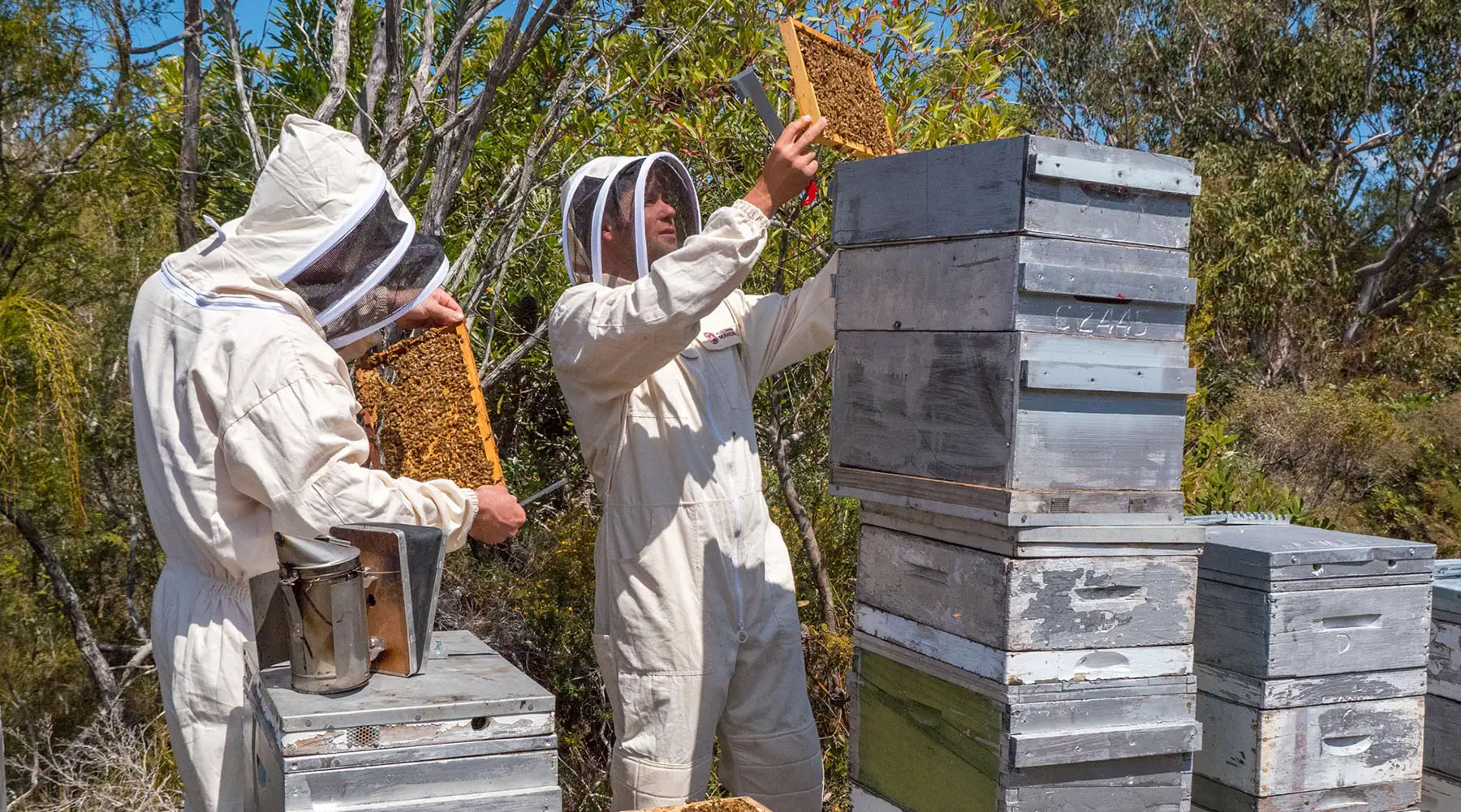
Byron Eco Park Habitat works hand in hand with Australia’s Manuka, a family honey business that has been keeping bees in the Northern Rivers since 1996, when it began as Tyagarah Apiaries. Its honey production operates right alongside the habitat restoration taking place across the property.
From native heath to honey
The bees forage in the coastal forests and heath around Byron Bay, gathering nectar from native Leptospermum, also known as jellybush or tea tree. The bees are kept on organic principles, without sugar feeding or veterinary pharmaceuticals, and every batch of Manuka honey is independently laboratory tested and graded by its MGO rating. Learn how MGO ratings work.
Bees and biodiversity
Honey and habitat go together here. The Living Carbon revegetation at Byron Eco Park Habitat included a high proportion of Leptospermum species, chosen to support both biodiversity and the quality of the honey. Native flowering plants feed bees and other pollinators, and the planned agrivoltaic farm will add rows of Leptospermum beneath its solar panels.
Taste the habitat
Alongside MGO-rated Manuka honey, Australia’s Manuka produces seasonal honeys that capture the flavours of the region, including Coastal Heath, Macadamia and Red Banksia, as well as superfood honey blends and beeswax products. Read the Australia’s Manuka story or visit the online shop.
Interested in bee tours or working with us? Get in touch.