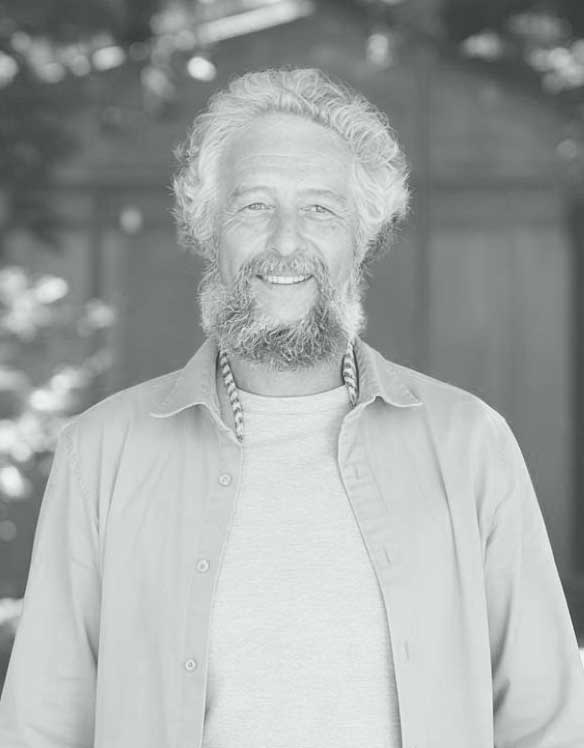
Most people who drive past Tyagarah have no idea what’s been going on up the dirt road for the last thirty-odd years. Dieter Horstmann does. He’s been the one doing it.
Early days: clearing a runway for the community
Dieter was born and raised in Germany and came to the Byron Shire with a German’s habit of assuming the alternative-energy future was simply going to arrive, and might as well arrive here first.
One of his first big local contributions had nothing to do with energy. In the early 1990s, a meeting at his Ewingsdale home sparked what became the Byron Gliding Club. In 1992 he and a handful of members selected, cleared and prepared the site at the eastern end of the Tyagarah strip. The lease was in his name, but the commercial rates were steep, so he handed it to the club, which took out a cheaper community lease with Council in 1993. He spent around $6,000 of his own on clearing and fencing, built a hangar, gave the club a free spot in it, and served as their technical officer. Typical Dieter: build the thing, then give it away.
Stones in the trench
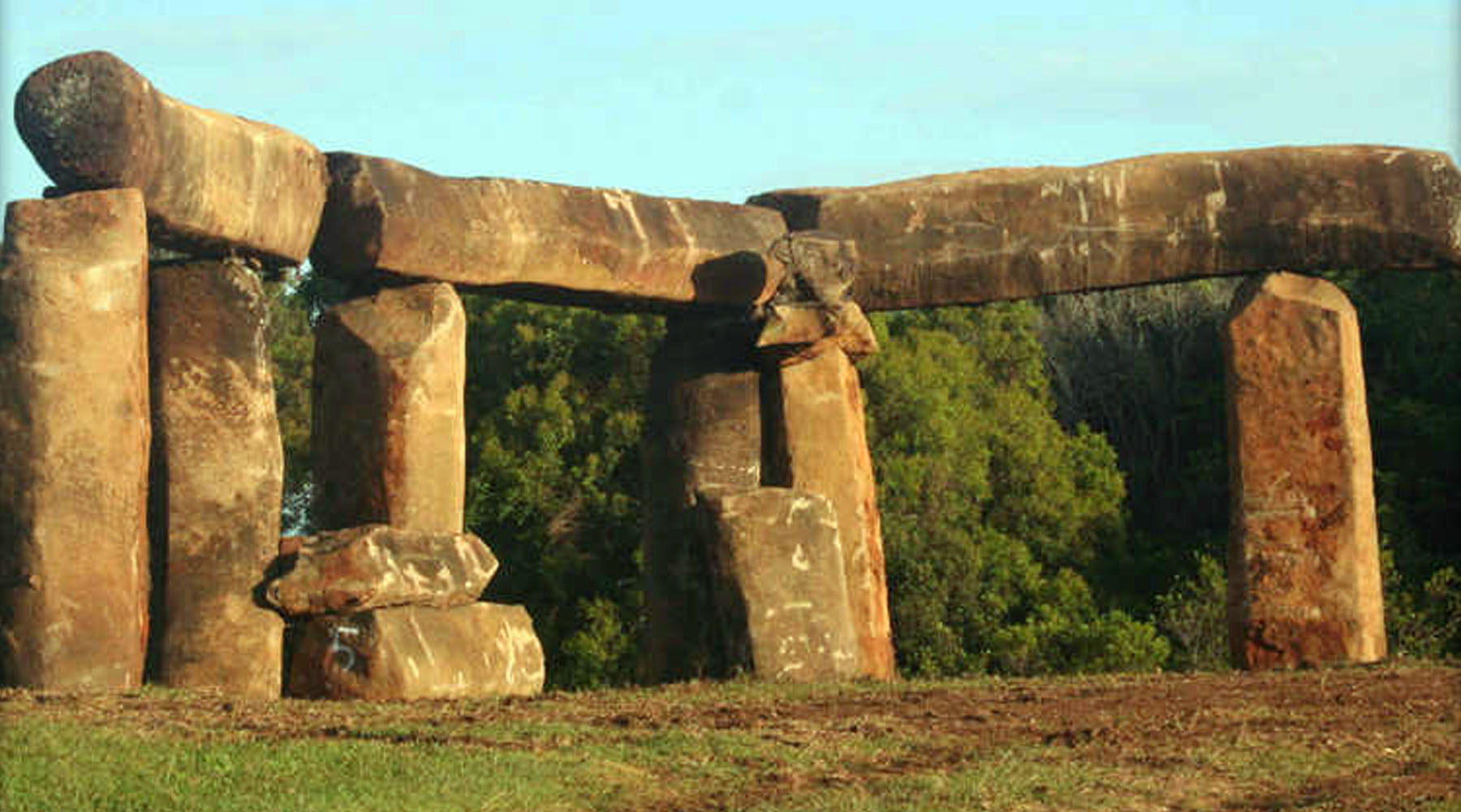
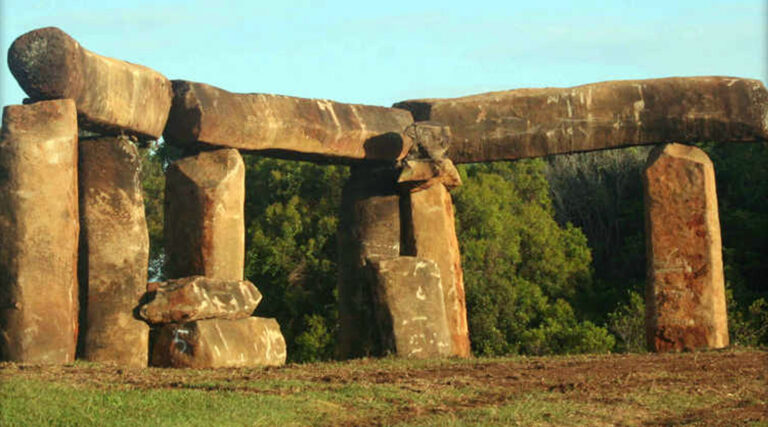
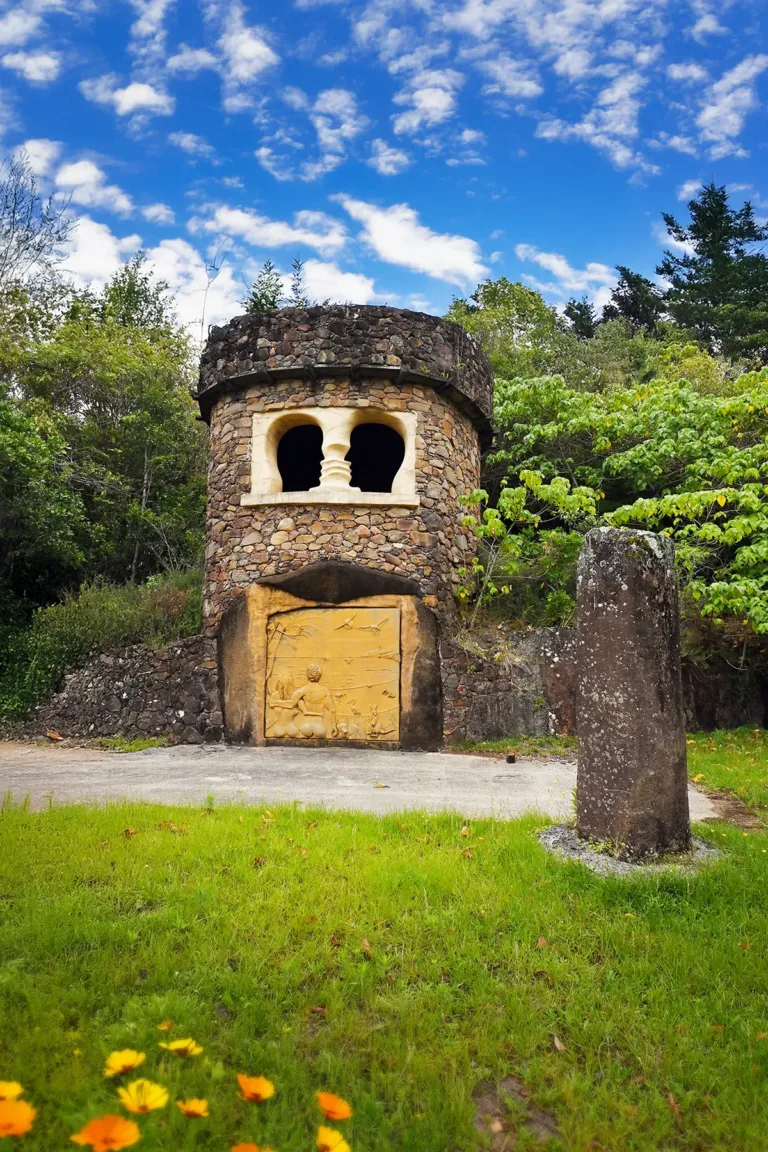
Eagle Farm, his beachfront property at Tyagarah, is where the bigger ideas took root. While digging trenches for water, his crew kept hitting enormous basalt columns. Rather than bury them, Dieter stood them up. Some run to ten metres. With a thirty-tonne excavator, a few artist friends and a good deal of stubbornness, they became Byron’s own “Stonehenge”, plus a cave, a dolmen and a castle-like rock tower sitting on a line between Wollumbin and the Cape Byron lighthouse. Even the international henge-spotters at Clonehenge wrote it up in 2012 and gave it six druids.
Byron New Energy
Around 2008, Dieter and a crew of equally passionate locals formed Byron New Energy, a not-for-profit co-operative for demonstrating clean technology. He formally donated part of his land to it, and Ballina MP Don Page came out for the handover, predicting the place would “go on to have quite an impact.” The co-op ran open days, explored turning bio-waste into power and fuel, and for years met in the shed that later became the honey factory. Not every experiment worked. That was rather the point.
Dieter also pursued a biomass energy plant for the farm, modelled on the thousands of German farms that had switched from food to energy, with excess power to the grid and recycled water for crops. A development application followed for a regional eco park: biochar, solar thermal, light rail, new building materials, all on one site.
EcoCrete
Building materials have been a long-running interest. EcoCrete, a hemp-based building material, was one Dieter championed at the park for its fire resistance, and he was happy to prove the point by putting a slab straight onto a gas burner. In a shire that knows bushfire, a fireproof, plant-based alternative to conventional building materials made obvious sense to him.
Byron’s Solar Revolution
In March 2015 Dieter organised the sell-out Byron Solar Revolution symposium at the park. Community energy groups talked through a community-owned retailer, new ways to fund rooftop solar and early battery storage. Professor Tim Flannery of the Climate Council wrote to The Echo afterwards to say the meeting was exceptional, and that Byron Shire was leading the nation. Not a bad review.
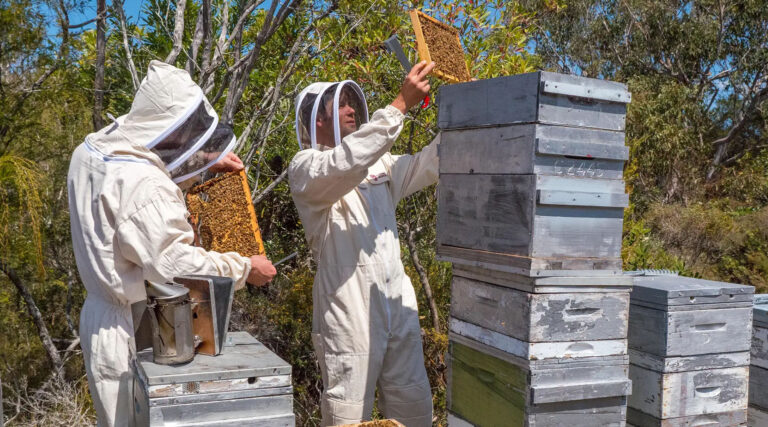
Around the same time he was trialling high-output solar panels with one of the first Aquion saltwater batteries in the country. The honey factory on site still runs entirely on solar and batteries, processing tonnes of honey a year without a power bill.
Art, honey and habitat
When Council moved John Dahlsen’s award-winning camphor-root sculpture off the Byron foreshore, Dieter bought it. The roots had come from his land in the first place, so in a sense it just came home. Local sculptors have carved stone on the property for years.
He’s also kept around thirty hectares as reserve, running down toward Tyagarah Nature Reserve, home to potoroos and wallum froglets. The recent revegetation planting extends that corridor further.
Still at it
Plenty of people in Byron talk about sustainability. Dieter has spent three decades handing over land, sheds, hangars and ideas to anyone with a good project and the energy to run with it. Some of it worked, some of it didn’t, and all of it was done in public, with the community invited in.
Byron Eco Park Habitat is the latest chapter. With any luck it won’t be the last.
– Carl