Most of us look at a creek and see water. Peter Andrews looked at a creek and saw a whole landscape, and how to heal it.
Reading the land
Born in Broken Hill, Peter learned to read country the hard way. Watching vast, flat inland lakes swell after rain and then slowly recede, leaving behind a wealth of edible native grasses, he came to understand that Australia was once dotted with lakes, billabongs and chains of ponds: an ancient floodplain system that has since largely disappeared.
His conclusion was simple and radical. If we want healthy land, we have to slow the water down.
Tarwyn Park
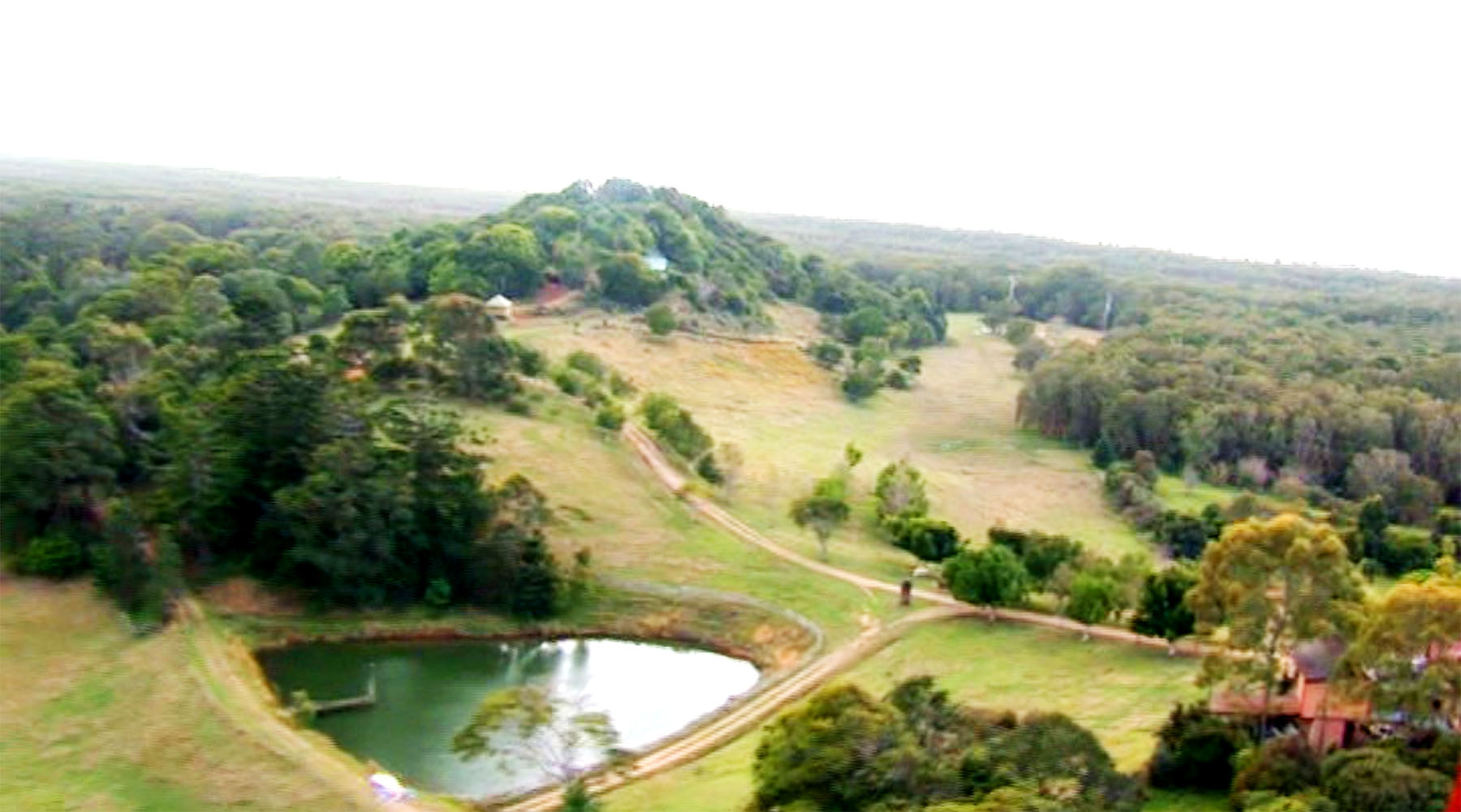
He put that idea to the test at Tarwyn Park, his thoroughbred stud at Bylong in the Upper Hunter. When he bought it, the place was a wreck. The creeks had been diverted from their natural course, and erosion and salinity had pushed the land close to the point of no return.
Peter didn’t reach for concrete or chemicals. He worked with what nature had left him: rocks, logs, a tractor, and the plants themselves, even the ones others called weeds. By gently shaping how water moved through the valley, he slowed it, spread it and let it soak back into the floodplain. Over time he turned degraded, salt-ravaged land into a fertile, drought-resistant estate.
He called it Natural Sequence Farming. Or as he once put it, “Plants will be the engineers.”
Thirty years against the current
Recognition did not come quickly. His methods ran counter to accepted practice, and for thirty years they were rejected by government authorities. Peter had no university degree to wave about either, cheerfully crediting “the university of hard knocks” instead.
But the results were hard to argue with. His 2005 appearance on ABC TV’s Australian Story has been voted one of the program’s best episodes. His books, Back from the Brink and Beyond the Brink, became bestsellers. In 2011 he was awarded the Medal of the Order of Australia for his work with Natural Sequence Farming, and in 2012 an international reference panel completed a scientific valuation of the method at Tarwyn Park.
A legacy that keeps flowing
Peter’s ideas have spread far beyond Bylong. One early adopter, the late Tony Coote, started a Natural Sequence Farming pilot on three kilometres of Mulloon Creek near Braidwood. It has since grown into the Mulloon Community Landscape Rehydration Project, covering 50 kilometres of creek and 23,000 hectares of land.
He paid a heavy personal price along the way, losing Tarwyn Park itself. But he never lost the conviction that this ancient, fragile continent could be brought back from the brink, one creek at a time.
Every farmer now slowing water across a paddock, every landholder rebuilding a chain of ponds, owes something to Peter Andrews. Thank you, Peter.
Watch the ABC’s story on Peter Andrews and Natural Sequence Farming, and look out for Back from the Brink: How Australia’s Landscape Can Be Saved (ABC Books, 2006).
– Carl